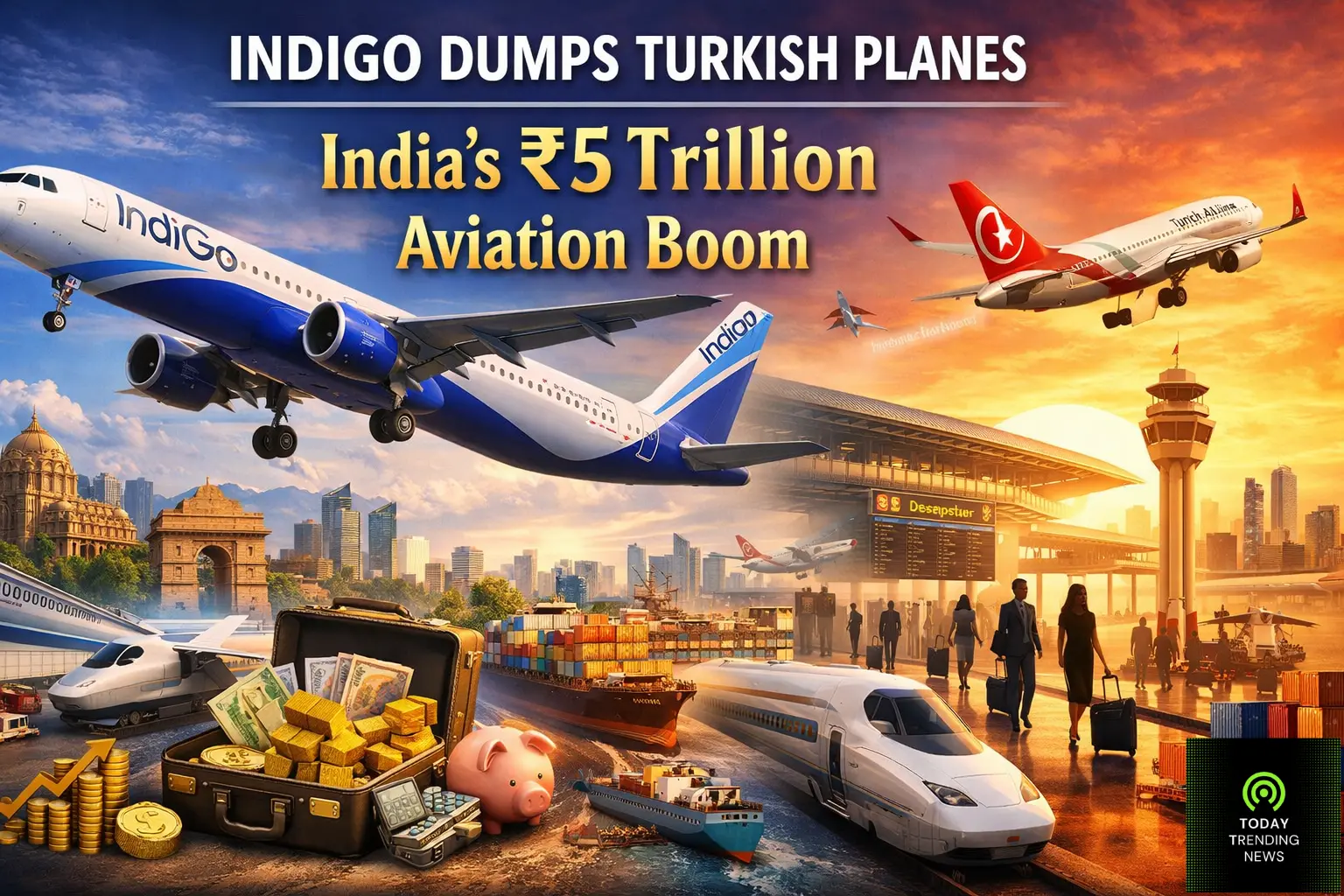
The aviation history of India is shifting to a new stage when the size, plan and self-sufficiency are of equal importance to sheer passengers numbers. In this context, the fact that IndiGo dumps Turkish planes is more than just an airline tweak – it reflects how Indian carriers are repositioning themselves for a potential ₹5 trillion aviation economy. Meanwhile, the pressure on infrastructure, new trade intellectualizations and shifting world prices by the government is changing the manner in which Indians are travelling, investing and going about their financial lives.
The reason why IndiGo is abandoning Turkish Airplanes
The Turkish Airlines strategy gave IndiGo several years of perceived shortcut into increasing its size in Europe by long-range without the necessity of developing its long-haul airfleet. Nevertheless, with the domestic and regional demand of India booming, it would limit the flexibility, pricing power and long-term strategic control as there is increased dependence on foreign partners.
By slowly reducing its reliance in the Turkish planes and structures associated with the same, IndiGo can:
- Design a more India-focused network between metros and tier-2 and -3 cities that are expanding.
- Make long-haul acquisitions and wide-body acquisitions of its own accord.
- Less exposure to geopolitical interference that may result in the operation of the codeshare and foreign hubs.
This move is in line with a wider trend of Indian airlines desiring to possess a larger share of the value chain rather than outsourcing their key aspects of international strategy. It is also compatible with the greater ambition of India as a country to transform not only into a huge passenger market, but also a serious aviation hub.
India’s ₹5 Trillion Aviation Vision
The policies and estimates in the industry indicate that the aviation sphere of India, comprising airlines, airports, cargo, MRO, tourism services and other related services, could find itself in the multi- trillion-rupee threshold in the coming years. The government is promoting regional connectivity, airport development and logistics corridors to facilitate this growth, not only among major metros, but also among smaller cities and the remote regions.
At the same time, the wider macro picture remains complex, with inflation, manufacturing activity, and consumption not always moving in one clean direction – a situation very similar to an Indian economy showing mixed signals. The aviation development in such a setting must be enabled by intelligent policy, effective urbanisation, and financial choices by the corporate and domestic spheres that are disciplined.
Trade Deals and New Corridors
Another aspect that is closely associated with trade deals and strategic partnerships is aviation growth. The need to have efficient airways that will help in transporting cargo, students, tourists, and business travellers to and out of India has become natural as India becomes increasingly engaged in its relationship with such countries as New Zealand, Australia, and the major European markets.
The Indian-New Zealand negotiations on agriculture, education, technology, and tourism can:
- Develop new routes that the Indian airlines can fly directly or through smart hubs.
- Facilitate better, bilateral commuting over one-directional movement.
In the case of airlines, this kind of trade agreement translates into better route economics, load factors and greater stability in long-term demand. For the broader economy, they reinforce the logic of long‑term planning and diversification – the same mindset that underpins investment planning.
Gold Prices, Travel Plans and Indian Middle Class
At the same time, when airlines and governments are thinking billions and trillions, individual travellers and investors are thinking monthly budgets and savings targets. By 2025, the world and domestic gold might experience average and high prices in the market as central bank purchases, geopolitics, and anticipation of interest rates produce market fluctuations. This directly applies to travel and lifestyle decisions because of Indian families, which traditionally view gold as a cultural possession as well as a safety net.
When the price of gold increases, most households are forced to make a trade-off between consuming the jewellery, making future investments or spending it to travel or educate their children. In such an environment, it becomes important to focus on budgeting, avoid impulsive big‑ticket purchases, and build a balanced plan that covers investments, emergencies, and experiences like travel – the kind of discipline that falls under managing your finances.
Practical Economy Tips for Flyers
With IndiGo reinventing its business and the Indian aviation market growing, every average traveller must consider not just their destination, but also how to keep themselves afloat. A few practical tips can help:
- Plan travel like a financial goal
Take big vacations like you would long-term savings. Book well in advance, monitor fares and compare service options with comparison tools rather than book under pressure at the last minute. This eliminates the chances of high-interest debt or ruined savings schemes simply due to a single vacation. - Balance gold, equity and experiences
When the price of gold and the interest rate change every few minutes, it is dangerous to invest all the money in a single asset. Coming to be healthier [set] can be having a little gold, a little growth investments and a bit of savings that can be spent on significant experiences such as education or travel. - View the aviation boom as an opportunity not a cost
The rising aviation industry does not just imply increased ticket prices, but it also brings about new bodies of employment and business in fields such as logistics, hospitality, tech, media and digital services aligned with travel. For freelancers and digital workers, this environment complements the shift towards high‑paying digital freelancing skills that can be used from anywhere, including airports, hotels, and global client locations.
The Bigger Picture: Strategy in the Skies and in your Wallet
IndiGo’s move to reduce its dependence on Turkish planes is a reminder that long‑term success in aviation requires control, flexibility, and alignment with national priorities – this is exactly why IndiGo dumps Turkish planes instead of staying locked into older lease structures. The fact that the aviation industry of India is being tended towards a multi-trillion-rupee ecosystem that is funded by infrastructure push and smart trade deals indicates that India is eager to become a global destination, not a huge passenger base.
To individual readers, the lesson is easy yet strong; just like airlines are reconsidering fleet strategy and alliances, people should begin reconsidering the way they balance travelling, saving, and investment in a world of increasing expenses and mixed financial indications. By combining better financial habits with informed travel choices – and by learning practical methods for managing your finances, it becomes possible to enjoy India’s aviation boom without losing financial stability.