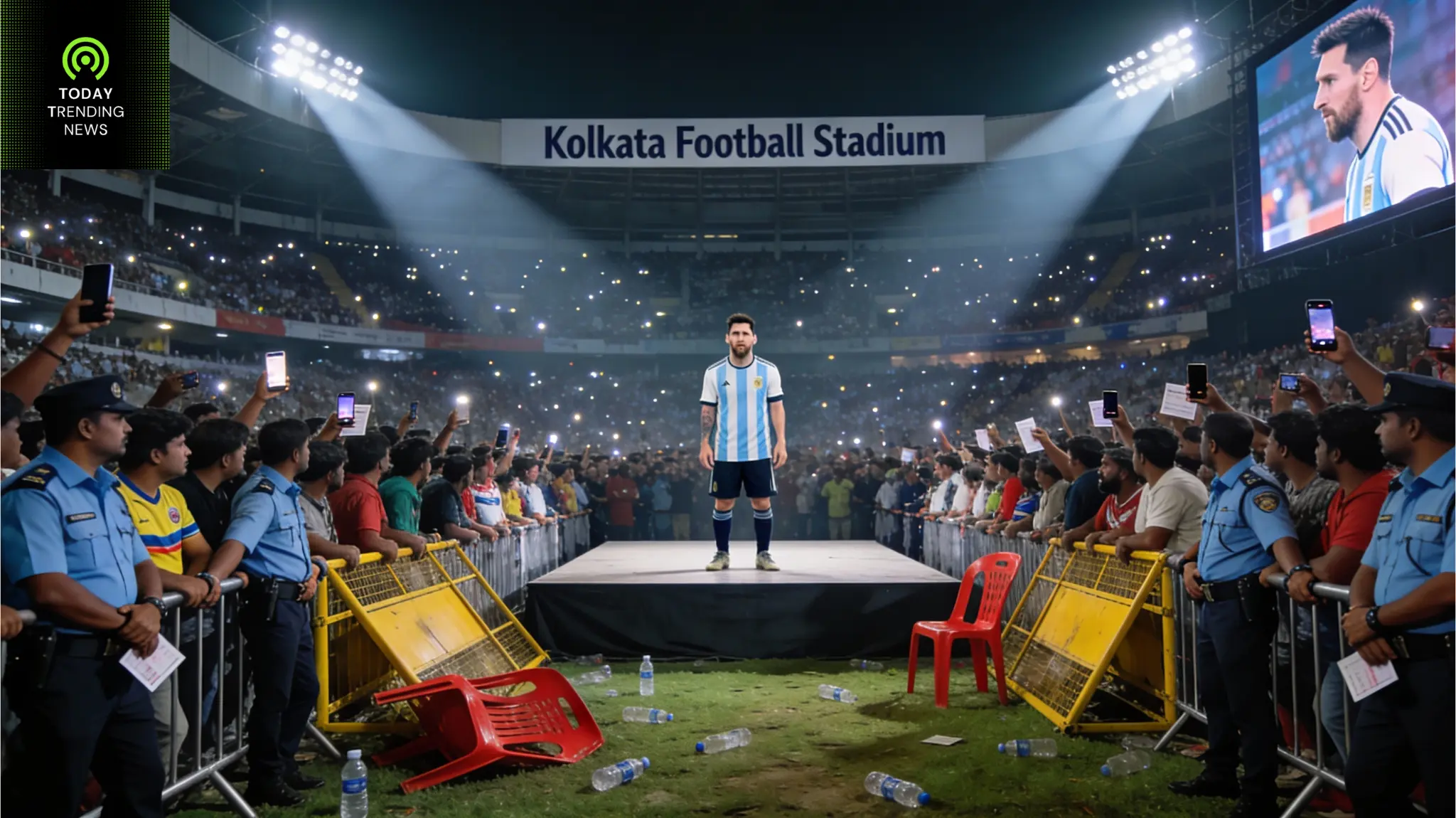
The football superstar Lionel Messi of Argentina was expected to give a memorable night in the Salt Lake stadium in Kolkata. In place of it, a nightmare of low-quality crowd management, sight issues, and citizens anger played out. The much-hyped GOAT India Tour event promised a once-in-a-lifetime event, which turned out to be a warning sign as to how events are being mishandled at the biggest event in the city in recent years.
1. The Build up Before Kolkata Visit by Messi
Kolkata is a city that runs on football which made it bright hearing that Lionel Messi would visit the city as part of his India tour. Social media coverage was very essential and influencers, celebrities, and local authorities were creating an excitement like never before. Most entry tickets were issued under different categories which include; general, premium, and VIP with prices ranging between moderate and exceptionally high prices with the target marketing fans who are utterly desperate to watch the living legend.
West Bengal has the Salt Lake Stadium which is the biggest sporting venue of the state and has been selected as the host. Campaign promotions assured:
- A live interaction with Messi
- World-class entertainment and performances
- Exclusive behind-the-scenes content
- A professionally managed, safe, and comfortable experience
Thousands of residents of Kolkata and football fans of the adjacent regions were delighted with such promises. It is hard earned money that many of the fans spend and some buy expensive VIP and premium tickets with an opportunity to see their sporting hero.
Related Reading: Lionel Messi Magic Makes It Eight – But The Shock Of City Winning All Awards
2. Event Day: Problems Begin at the Gates
On this day of the show, the reality struck back brutally. Hours prior to the set time, incredibly long lines started forming on the outskirts of Salt Lake sporting stadium. A supposedly easy process of entry became an administrative fiasco that failed on different levels.
Entry and Gate Management Issues:
- Late opening of gates: Gates which were to be opened at a certain time were opened much late hence creating congestion.
- Poor staffing: The security staffs and event staffs appeared unprepared with the number of people present and thus, processing was slow.
- Checkpoint confusion: Fans had trouble trying to identify where the gates were and where they were in relation to their validated tickets.
- Long queues: Sometimes, fans waited 23 hours to get inside the stadium, leaving older fans and children drained.
- Selective blockades: It was reported that some gates were closed during the middle of the event and thousands of fans were forced to switch to existing crowded ones.
It was self-evident how disorganized it could be, not to mention families with children, old citizens who have been saving money on this event, and ravenous young football fans all impatiently awaiting the real event even prior to it starting.
3. Failure of Visibility and Sound System Inside the Stadium
Those who had finally got through the gates then found out, they were only just beginning. The positioning and arrangement of the stage and the spectatorial was the center of immense grievances.
Visibility Problems:
- Poor stage alignment: The main stage was placed in such a way that the larger parts of the stadium had blocked or partialized views of Messi.
- Poor screens: Although large screens were provided, they were reported to be strategically placed, especially to the viewers who were not close to the stage.
- Blocked sightlines: Structural pillars and camera rigs in certain premium areas blocked direct sightlines, defeating higher-priced seats.
- Angles problems: Fans in some of the stands were able to see only partial views only the side view of Messi at times rather than a full view of his entire face.
Sound System and Audio Issues:
- The sound systems in some areas were not of such high quality and clarity that spectators could listen to announcements or the dialogues of Messi.
- The sound quality varied among the various sections of the stadium and some fans could not hear vital aspects.
- The even flow of the event was interrupted on several occasions because of technical glitches.
Premium priced fans were in that unfortunate situation of being physically present in a historic moment and not experiencing it as he was promised. Attendance was overwhelmed with numerous complaints shared across social media networks with most of them being devastated and furious.
Related Reading: The Hottest Trends Need To Know In 2025 – Stay Updated
4. Crowd Violence and Hurricanes: Breaking and Entering
The peaceful demonstration soon erupted into anarchy as the disappointment of thousands of fanatical enthusiasts rose. The scene then broke to passionate yelling and destructive activity:
Fan Protests and Slogans:
- The audience started shouting at the organizers and expressing their dissatisfaction.
- The fans put banners and placards that wanted the event management to be answerable.
- Such slogans as We can not see Messi! spread through the stadium contributing to the tension.
Vandalism and Property Damage:
- Chairs uprooted: Social-media videos depict fans taking plastic stadium chairs on the ground during protest.
- Bottles and objects thrown: Some overwhelmed guests threw bottles of water, plastic cups, among others, onto the arena and the stage.
- Railings damaged: Safety railings in some parts were pushed aside and shattered by the excited mob.
- The crowd barriers were compromised: There were various spots when the barriers were smashed down by fans who wanted to be closer to the stage or to leave.
The videos went viral on Twitter, Instagram, YouTube, and Facebook to make the incident well-known. The story was taken up by international media and reported by the world news media. Kolkata and the whole of India had become embarrassed as well, a sportsman of global stature being visited and disgraced by the local ineptitude.
5. Police Intervention and Security Response
But when the situation deteriorated local law enforcement agents and the security operatives intervened:
- Police came and forced back the crowd to prevent further escalation.
- Advertisements encouraged the fans to remain peaceful and not engage in destructive behaviour.
- The security forces transferred frenzied fans to the other portions of the stadium to decongest some areas.
- They also opened exit tracks to allow impatient fans to exit the premises easily.
- Vandalism cases were registered in the police whereby the damage was recorded.
The incident eventually concluded without significant injuries or stamps but there was a possibility of a bigger disaster, which had been threatened. Panic spike at the height of the confusion might have made the situation tragic, as the stadium was closely packed as it was.
6. Response and Government Inquiry of Mamata Banerjee
West Bengal Chief Minister Mamata Banerjee responded speedily to the outrage of the people:
Official Statement:
She personally apologised to Lionel Messi and the fans of Kolkata as she recognised how she was very poorly organised as well as the government has to do serious things as promised.
Inquiry Announcement:
The Chief Minister invited an extensive investigation to identify failures. The inquiry would look at:
- Organisation and logistics between the organisers and the stadium organisations.
- Crowd -management protocols and their implementation.
- Choices on stage and in-seat view systems.
- Adequacy of personnel and security in place.
- Sound -system and technical set up.
- Safety standards and safety regulations adherence.
Accountability and Action:
The government would sue the organisers in case the investigation found out violations of contractual contents or safety provisions. This activity was an indication to the event management company as well as the population that accountability would be implemented.
Related Reading: PM Shri Narendra Modi Engages Heart-to-Heart with Lakshadweep Beneficiaries
7. Organisers’ Defence and Technical Explanations
Event organizers, facing public backlash and government scrutiny, began offering explanations for what went wrong:
Organizers’ Claims:
- Unexpected crowd behavior: Organizers claimed that while they had anticipated crowds, the actual attendance and behavior surpassed their forecasts. They stated that fans became restless sooner than expected, creating unexpected pressure on crowd management systems.
- Technical glitches: Some technical failures with sound systems and projections were attributed to last-minute equipment issues that arose during the event setup.
- Safety-first approach: Organizers stated that certain decisions, such as blocking specific sections or limiting capacity in areas, were made with safety considerations, but these decisions reduced comfort and experience for attendees.
- Venue limitations: They pointed to inherent limitations of the Salt Lake Stadium itself, suggesting that some structural issues made it difficult to achieve perfect sight lines from all sections.
Comet’s Neutral Analysis:
While organizers presented their defence, multiple independent reports suggest that a significant portion of the failures stemmed from inadequate pre-event planning, insufficient staff training, and weak crowd management protocols. Blaming the venue, while partially valid, did not explain all the problems.
8. Fan Response externally and internally on Social Media
The event caused enormous debates on digital media:
Disappointed and Angry Fans:
Numerous fans were so disappointed. Most frequent themes in their postings were:
- “Went through my salary of a month buying a ticket and did not even get to see Messi.”
- “Planners must be answerable. This was not acceptable in a world-class event.”
- “We paid high prices and received a high-quality disaster.”
- Having videos of empty seats with good views in the stadium, even when the areas served by it were full and with sight obstructions, carried conspiracy theories that there was some poor allocation.
Memes and Trolling:
The culture of the internet in India resulted in the event organizers being mocked by thousands of memes and jokes. The hashtags used were #MessiKolkataDisaster and #SaltLakeStadiumFail.
Understanding and Support:
Not everything was negative in terms of reactions. Certain fans did concede that it was historical as far as the Indian football was concerned to have Messi in Kolkata despite all the turmoil. This group of fans gave optimism that the inquiry by the government would bring about a change in the management of the future events.
Related Reading: Legendary Coach Nick Saban Announces Retirement After Historic Career
9. International Media Coverage and Global Reactions
World fame came to the incident soon:
- The story was shared by the major news sources, including BBC, Reuters, and AP News, which underlines the mismatch of the global popularity of Messi and the ability of event management in India.
- International football commentators were disappointed that the visit of a legendary player to India was spoiled by failure by the organization.
- Other analysts took this incident to evaluate the infrastructure and management issues in India, yet other analysts recognized that other incidents of the kind have taken place in better-organized countries.
The coverage highlighted the problem, but also tarnished the image of Kolkata as a sporting city and also made question whether India could host the majority of the international events.
10. Lessons for Future Mega Events in India
The chaotic incident involving Messi has been a lesson to the event organizers, authorities of stadiums and government authorities across India:
Key Lessons Identified:
- Capacity planning: The organizers should make realistic capacity plans and not overbook activities to unsafe standards, though it will reduce revenues.
- Training of staff and preparation: The security, ushering and operational staff should be well prepared and trained before the events.
- Venue evaluation: Event planning has to be followed by proper site visits and feasibility studies. Structural barriers are to be well established and made known to the attendants.
- Communication: Expectation of fans can be handled by bathing more during pre-event communication on the precise seating, viewing quality expectations and entrance procedures.
- Emergency protocols: There should be clear evacuation and crowd-control procedures that are to be tested on a regular basis.
- VIP and high-end quality: In the event that premium tickets are being sold, the viewing experience should really be as premium as the high prices.
Industry effect:
The other large venues and event planners in India are reconsidering their measures. Festival planners, sports agents and concert organizers are increasingly implementing tougher safety and management protocols on the lessons that have been learnt during the incident involving Messi.
One thought on “Messi Kolkata Event Chaos: Mamata Banerjee Apologise, Orders Probe Amid Fan Anger”