Introduction
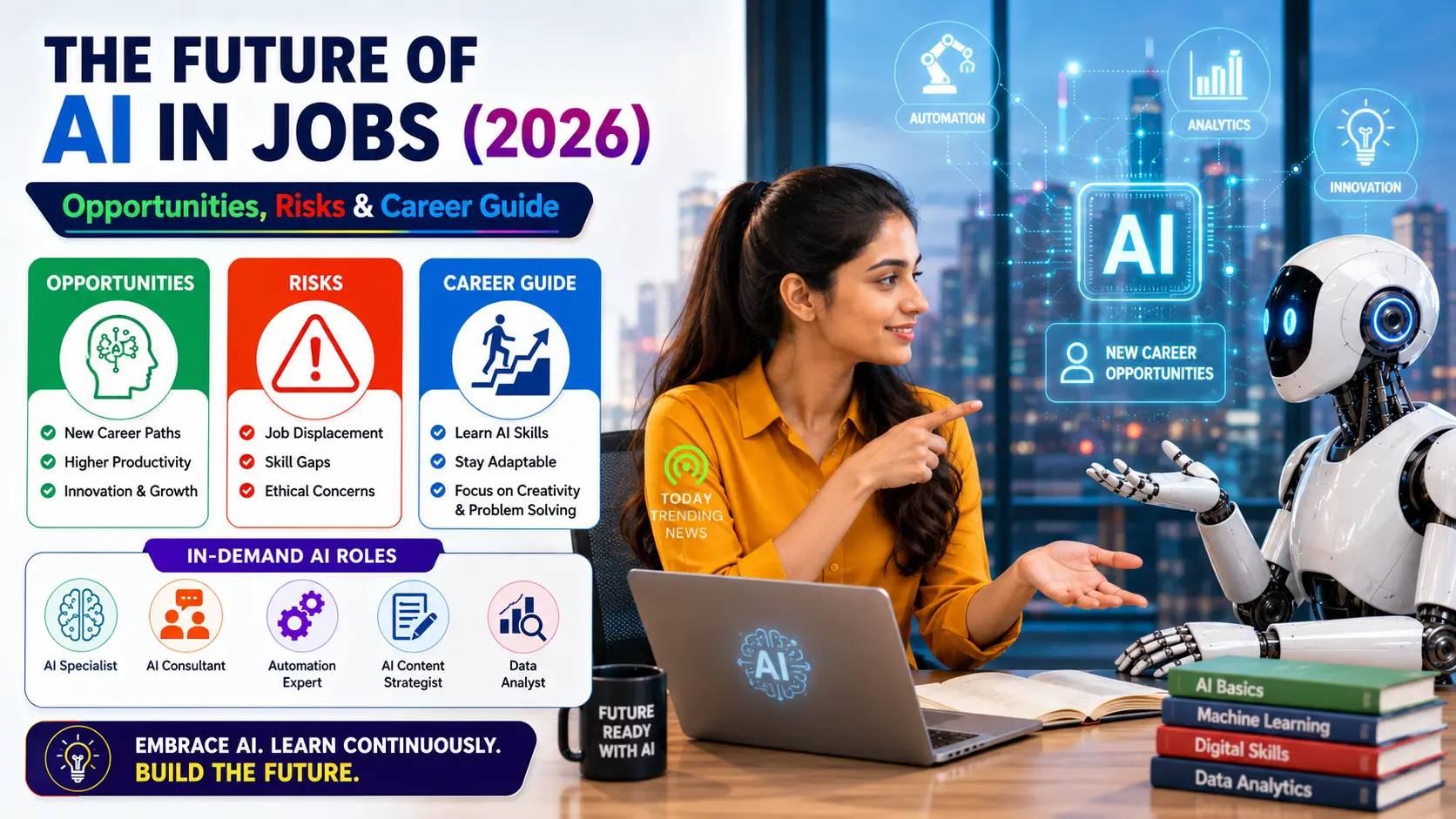
The role in the Future of AI in Jobs is among the phenomena that have taken center on the current working landscape. Artificial Intelligence has been reshaping industries, automating and redefining the skills most prized by employers.
Many individuals are concerned that AI will make their jobs obsolete, others think it will generate fresh jobs and enhance productivity. It is a fact that the reality is somewhere in the middle.
For those new to AI, begin with Artificial Intelligence Guide 2026 to grasp the concepts of AI and its growing influence in diverse industries.
This guide addresses the role AI is playing in reshaping careers, what types of positions could be impacted, emerging roles in this landscape, and what people can do to gear up for the new world.
Why AI Is Changing the Job Market
During each great technological advance people have been reshaped in their working routines.
Examples include:
- Industrial machinery
- Computers
- The internet
- Smartphones
Artificial Intelligence is the next major transformation.
Businesses use AI to:
- Automate repetitive tasks
- Improve decision-making
- Analyze large amounts of data
- Increase productivity
The job market will continue to evolve as businesses increasingly integrate AI technologies.
Can AI take over jobs from people?
It is one of the most frequently asked questions.
It’s not straightforward.
AI does not aim to supplant jobs, just particular parts of them.
AI can automate such things as:
- Data entry
- Basic customer support
- Simple reporting
- Repetitive administrative work
But jobs that necessitate creativity, emotional intelligence, leadership and strategic thinking are not easily automated.
What roles are most at risk from AI?
Certain careers are more susceptible to automation than others.
Data Entry Operators
AI systems can handle information faster and with better accuracy than humans.
Basic Administrative Roles
There are numerous repetitive jobs in the office that can be automated.
Routine Customer Service
An increasing number of customers have come to interact with AI-driven chatbots.
Simple Accounting Tasks
Bookkeeping and reporting processes can be automated using AI software.
It is not the end of these jobs, but rather a change in the nature of employment that will occur to them.
These are jobs that AI is creating
In addition to automating some jobs, AI is bringing about new career possibilities.
Examples include:
AI Specialists
Expert who builds and oversees AI systems.
AI Consultants
Experts assisting businesses with AI solutions.
Automation Experts
Copyrighter or author of code used to automate processes.
AI Content Strategists
Human creativity for content generation is being blended with AI tools by content professionals.
Data Analysts
Individuals who analyze data and give business insights.
Many of these avenues are now opening up because of the AI Tools for Beginners and knowledge-based practical tutoring provided for AI education.
AI and Freelancing Opportunities
One of the top groups that reap most benefits from AI are freelancers.
AI helps freelancers:
- Create content faster
- Improve productivity
- Complete projects with a greater efficiency
- Serve more clients
How to Earn Money Using AI is being taught in different methods today, including content creation, consulting, and digital services.
AI in Marketing Careers
AI is revolutionizing digital marketing.
Artificial Intelligence assists marketers in the following ways:
- Analyze customer behavior
- Create content
- Improve advertising performance
- Automate campaigns
There are advantages to professionals with an understanding of AI in Digital Marketing in the upcoming years.
Skills That Will Be Useful In The A.I. Era
Technical and Human Skills will be needed by the future workforce.
Critical Thinking
Critical thinking and problem solving skills.
Creativity
One of the most powerful human capabilities is the ability to develop new concepts.
Communication
Effective communication will remain critical and essential.
Adaptability
The quick evolution in technology requires that employees will need to evolve as well.
AI Literacy
It is important to be aware of the workings of AI, especially as it will become more prevalent.
How Students Can Prepare for the Future
Students should be given opportunities to learn how to implement Artificial Intelligence skills from an early age.
Recommended actions:
- Gain a fundamental understanding of AI concepts
- Explore AI tools
- Develop digital skills
- Practice content creation
- Understand automation
Going ahead and getting started early can make a big difference in terms of opportunities in the future.
Benefits of AI in the Workplace
There are numerous benefits to using Artificial Intelligence.
Increased Productivity
Time spent on repetitive tasks is reduced by AI.
Better Decision-Making
AI is able to process data more effectively.
Improved Accuracy
Errors by humans are reduced by automation.
More Innovation
All employees have opportunities to perform strategic and creative tasks.
Technology is playing an increasingly important role in reshaping roles and creating new ones as stated in the World Economic Forum Future of Jobs Report.
Challenges of AI in Employment
There are some risks to AI too.
Job Displacement
There may be some required retraining for some workers.
Skill Gaps
Qualifying talent can be hard to come by.
Economic Adjustment
It will take a few years to acclimate industries.
Ethical Concerns
The responsible implementation of AI is still significant.
The Future Outlook
AI careers should not be a threat; rather, it should be seen as a transformation.
In the history of mankind, technology has been instrumental in changing the way people go about their work.
AI is expected to:
- Create new careers
- Increase productivity
- Improve efficiency
- Support innovation
Those who become familiar with AI and adjust to shifting technologies will probably reap the most rewards.
Frequently Asked Questions
Does artificial intelligence herald the end of jobs?
Yes, there will be some things AI will take over, but there will also be new opportunities.
What types of jobs can’t be replaced by AI?
Creativity, leadership, empathy and strategic thinking required.
Do AI technologies develop new professions?
Yes. The demand for roles associated with the AI sector is surging.
What are the careers that can help me in my life?
Literacy in AI, communication, creativity and problem solving.
Are people who don’t know much about AI able to prepare for an AI career?
Absolutely. A good foundation of learning AI tools and digital skills is a starting point.
Conclusion
The job application is inextricably tied to the future of AI, with undeniable prospects of opportunity as well as challenge. Though some of the jobs might be replaced by automation, AI is also giving birth to new jobs, and working methods.
Ultimately, the most successful professionals will be those that embrace technology, seek further learning and skills which complement AI not compete with it.
Familiarize yourself with what AI is now to ready yourselves for opportunities ahead.
2 thoughts on “Future of AI in Jobs (2026): Opportunities, Risks & Career Guide”